

Meet four BuildHop founders building across AI agent security, software testing, WordPress performance, and AI companionship. Each is finding a practical way to make complicated systems more dependable.
Most software works beautifully when everything goes according to plan.
The more interesting problems appear when it does not.
An AI agent encounters a poisoned response. A founder launches without realizing the signup flow is broken. A WordPress site becomes slower with every new plugin. An AI companion forgets the conversation that mattered yesterday.
Users may not describe these as infrastructure problems. They simply experience them as broken trust.
Welcome to Builders Behind the Launches, a recurring BuildHop series highlighting the people and stories behind the products launching in our community.
This time, we are featuring Josh Waldrep, Will Ballentine, Marcin Dudek, and Levi.
Their products occupy very different corners of technology. But each founder is working on a version of the same challenge: understanding where a system can fail and building something that helps people trust it again.
Josh Waldrep, Pipelock
Josh Waldrep is the creator and maintainer of Pipelock.
He came to software through operations, home labs, and attempts to automate real work rather than through a traditional engineering path. That background continues to shape the problems that interest him.
Josh is drawn to systems where software has meaningful power but no trustworthy boundary around it. He cares about security controls, public evidence, and tools that operators can understand without simply trusting a vendor’s claims.
If a security product says it blocked something, Josh wants to know where the decision happened, what evidence it produced, and whether someone else can verify the result.
That interest became much more concrete when he began building AI agents to automate scheduling, dispatch, and back-office work for a plumbing business.
Those agents had access to shell commands, API keys, and unrestricted network connections. A poisoned response or malicious instruction could potentially send credentials directly out of the environment.
Josh looked for something that could sit between the agent and the internet, enforcing policy independently of whatever the agent decided to do. When he could not find the boundary he wanted, he started building it himself.
What began as a home lab fix for a real operational problem eventually became Pipelock, an open-source firewall for AI agents.
Pipelock mediates HTTP, WebSocket, and MCP traffic. It is designed to block secret leaks, prompt injection, server-side request forgery, and unsafe tool calls before they leave the environment.
Josh initially believed detection quality was the main problem. Better patterns, he thought, would catch more attacks.
Over time, he realized that detection without an enforceable boundary is still only advice. The harder problem is placing policy at the point of action, failing closed when the system cannot make a safe decision, and producing evidence outside the agent’s own trust boundary.
That insight changed Pipelock from a scanner into a firewall.
Josh also maintains Agent Egress Bench, a public and tool-neutral collection of attack cases for testing agent security controls, and Pipelock Rules, a community repository for signed detection content. The common thread is making security measurable instead of asking people to trust a product page.
One early signal came when Pipelock was added to the CNCF Landscape. That moved the project from something Josh had built for his own environment into something other people could place within the broader security ecosystem.
The stronger signal came later, when people began testing it, filing specific issues, and asking how to use it with their own agents. They were no longer reacting to an idea. They were depending on the boundary, discovering edge cases, and expecting it to hold.
Josh is now working through a challenge familiar to many security founders: distribution requires trust. A technically correct tool still has to earn the right to sit inside a sensitive part of someone’s system.
His approach is to make that evaluation easier through public attack cases, reproducible benchmarks, signed evidence, clear limitations, and demonstrations people can verify themselves.
His advice to first-time builders follows the same philosophy. Start with a problem you have personally experienced. Publish evidence, not just claims. Show the test, the failure case, the limitation, and the result.
Shipping matters, but shipping is not distribution. Founders still have to explain the problem from different angles after launch day instead of expecting one announcement to carry the entire project.
What is Pipelock?
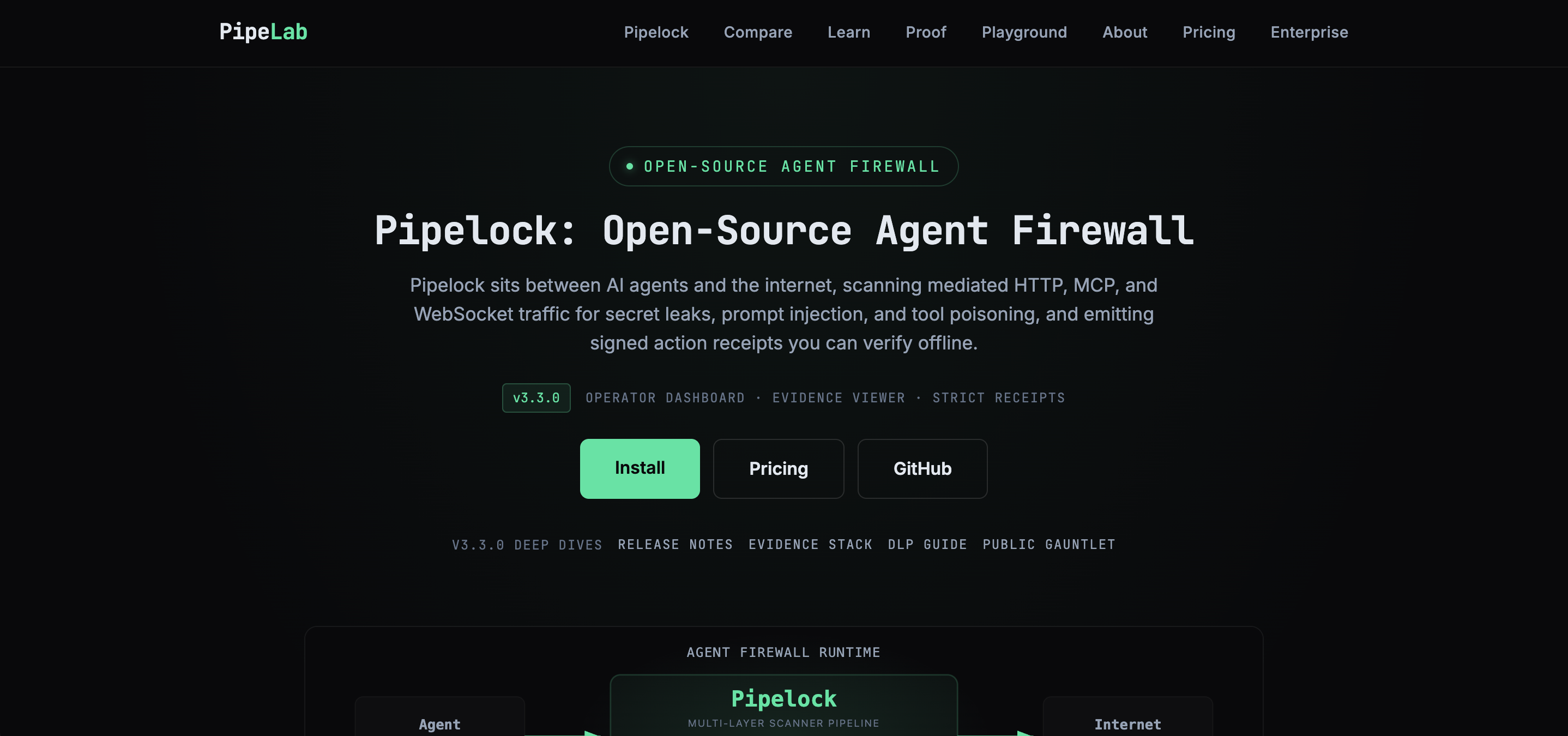
Pipelock is an open-source firewall that creates an enforceable boundary between AI agents and the internet. It mediates agent traffic and blocks secret leaks, prompt injection, server-side request forgery, and unsafe tool calls while producing evidence that operators can independently verify.
Will Ballentine, VeriWasp
Will Ballentine describes himself as a problem solver and perfectionist at heart.
He enjoys building projects and software that people can use, enjoy, and occasionally break. Solving the problems associated with bugs and seeing research turn into something that works is what keeps him building.
That mindset led Will toward a problem many indie founders know they should address but rarely have the time or resources to solve properly: testing.
In his day jobs, testing had always been a challenge. Outside of work, he would see founders launch products and then discover that users were abandoning them because the signup flow was broken or another critical path had failed.
Conventional testing tools such as Playwright and Cypress can be tedious to configure and maintain, even with help from AI. Tests built around fragile selectors can break whenever a page changes. For a solo founder, building and maintaining a complete testing system can compete directly with the time available to improve the product itself.
Will wanted to remove that friction.
He created VeriWasp as an AI-driven testing tool for indie SaaS founders and small teams.
A founder can paste in a URL or describe a flow in plain English. VeriWasp then drives a real browser through the product as an actual user would and reports what broke. There are no CSS selectors to maintain, no traditional test scripts to write, and no QA hire required.
The product is built around the workflows that matter most. It can test signup, login, onboarding, checkout, or another core action. Every test it creates belongs to the founder’s account, so successful flows can continue running on future deployments.
VeriWasp also includes LaunchAudit, a one-time pre-launch check. Instead of only scanning a homepage, LaunchAudit identifies the product’s core workflow and walks through it in a real browser. It also checks pages for accessibility, breakage, speed, SEO, and AI search readiness before producing a prioritized list of issues.
Will’s understanding of the market changed as he began presenting VeriWasp to indie founders.
He had assumed most founders were already testing their products and were simply frustrated with the available tools, as he had been in corporate environments. Instead, he discovered that many founders were not thinking about testing at all. They had clicked through the product themselves, seen it work once, and considered that enough.
This changed how Will explained the product. Before he could present VeriWasp as a better way to test, he first had to show founders why testing the same workflow in different ways matters.
One promising moment arrived from an unexpected direction. A founder contacted Will to pitch him a product. Will agreed to listen and then suggested that VeriWasp might be able to help test it. The founder reluctantly agreed and has been a daily user ever since.
Will’s biggest challenge now is getting the word out. He is not naturally a heavy social media user, and VeriWasp is still in the early stages of building an audience. His approach has been to make genuine connections and let awareness grow through useful conversations.
That approach is also at the center of his advice to first-time builders.
Do not immediately jump onto social media and shout about your product. Be helpful. Take an interest in what other people are building. A good idea does not guarantee quick sales, and nobody wants to hear someone sing the same song every day.
The views and signups can come, but founders still have to earn attention and work for the result.
What is VeriWasp?
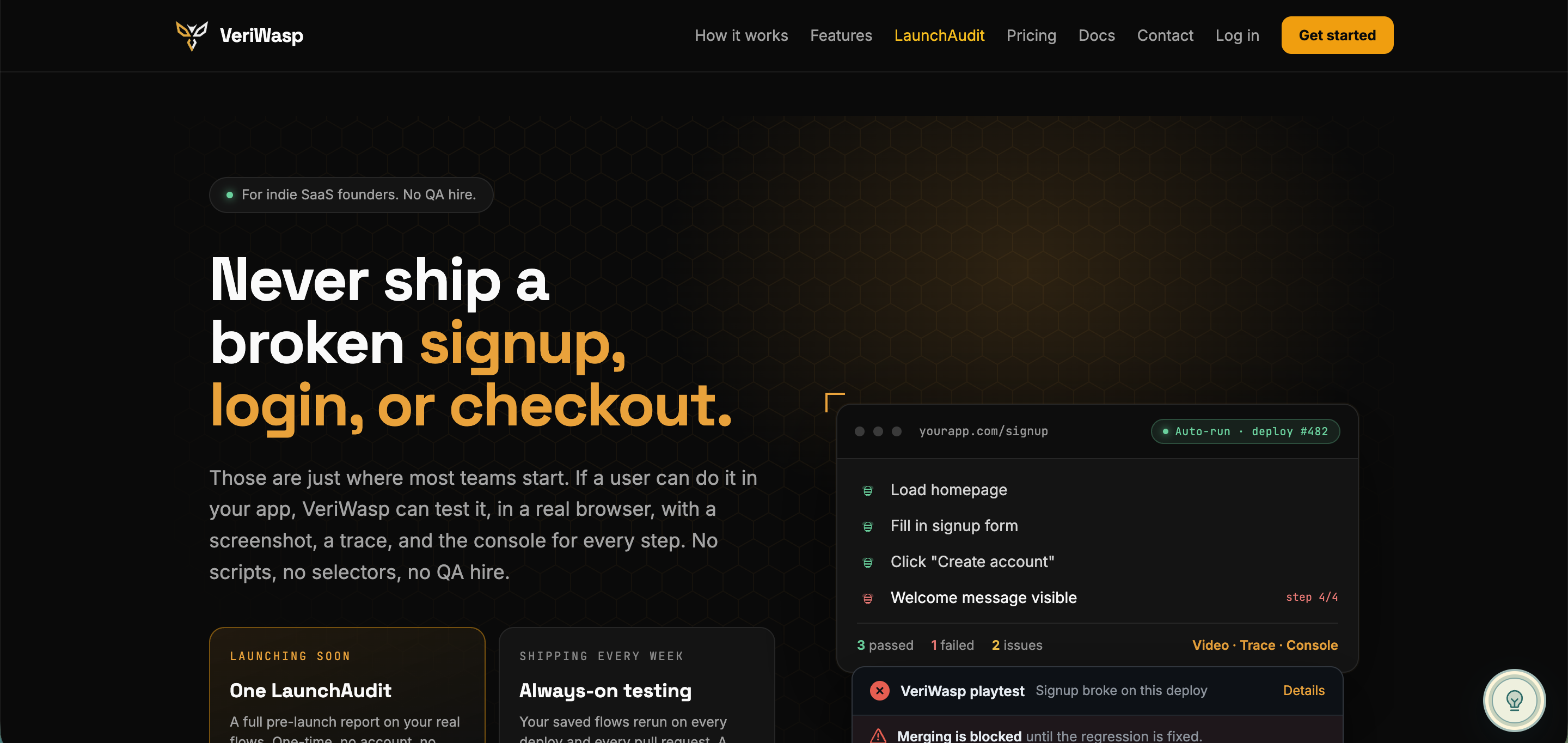
VeriWasp is an AI-driven testing platform for indie SaaS founders. It runs critical product flows in a real browser, identifies what broke, and provides evidence such as video replays, request traces, console errors, and accessibility results without requiring founders to maintain traditional test scripts.
Marcin Dudek, WP Multitool
Marcin Dudek likes solving problems, especially the stubborn and practical problems that other builders might overlook.
Where other people see a problem, Marcin often sees an unusual, bold, or unconventional solution. His projects tend to connect one or more of the things he enjoys most: helping others, games, optimization, and finding better ways to make systems work.
After years of working with WordPress, he had seen what happens when websites accumulate plugins, outdated components, debug logs, and layers of maintenance debt.
A site that was once straightforward gradually becomes slower, more fragile, and harder to understand.
The usual response is often to install another plugin.
One plugin handles performance. Another cleans the database. Another identifies slow queries. Another manages configuration or maintenance tasks. Each addition may solve an immediate problem, but the growing stack creates complexity of its own.
Marcin built WP Multitool as a unified approach to the problem.
It is a WordPress developer toolkit that identifies what is slowing a site down and helps fix it without requiring a sprawling collection of separate optimization plugins.
WP Multitool also gave Marcin an early reminder that demand can arrive before a founder expects it.
After writing launch messages for X, Facebook groups, and Reddit, he posted them one evening. The next morning, he woke up to three payment notifications.
He had not expected to make a sale for at least a few days. The response showed him that the problem was recognizable and that people were willing to pay for a simpler solution.
The experience also changed the way Marcin thought about launching.
He once saw building and releasing as the hardest part and the end of the process. Now he compares creating software to bringing something to life. Planning, development, and launch are important stages, but the product’s real life begins after it is released.
That is when users arrive, feedback accumulates, and the founder discovers what the product actually needs to become.
Marcin is open about the uncertainty that follows. He worries about inconsistent sales, spreading himself across too many projects, and whether products beyond his early successes will convert users.
His advice is to look beyond products made exclusively for other builders and developers. That market is increasingly saturated. Instead, he encourages founders to solve common problems for nontechnical people who lack the time or expertise to solve those problems themselves.
What is WP Multitool?
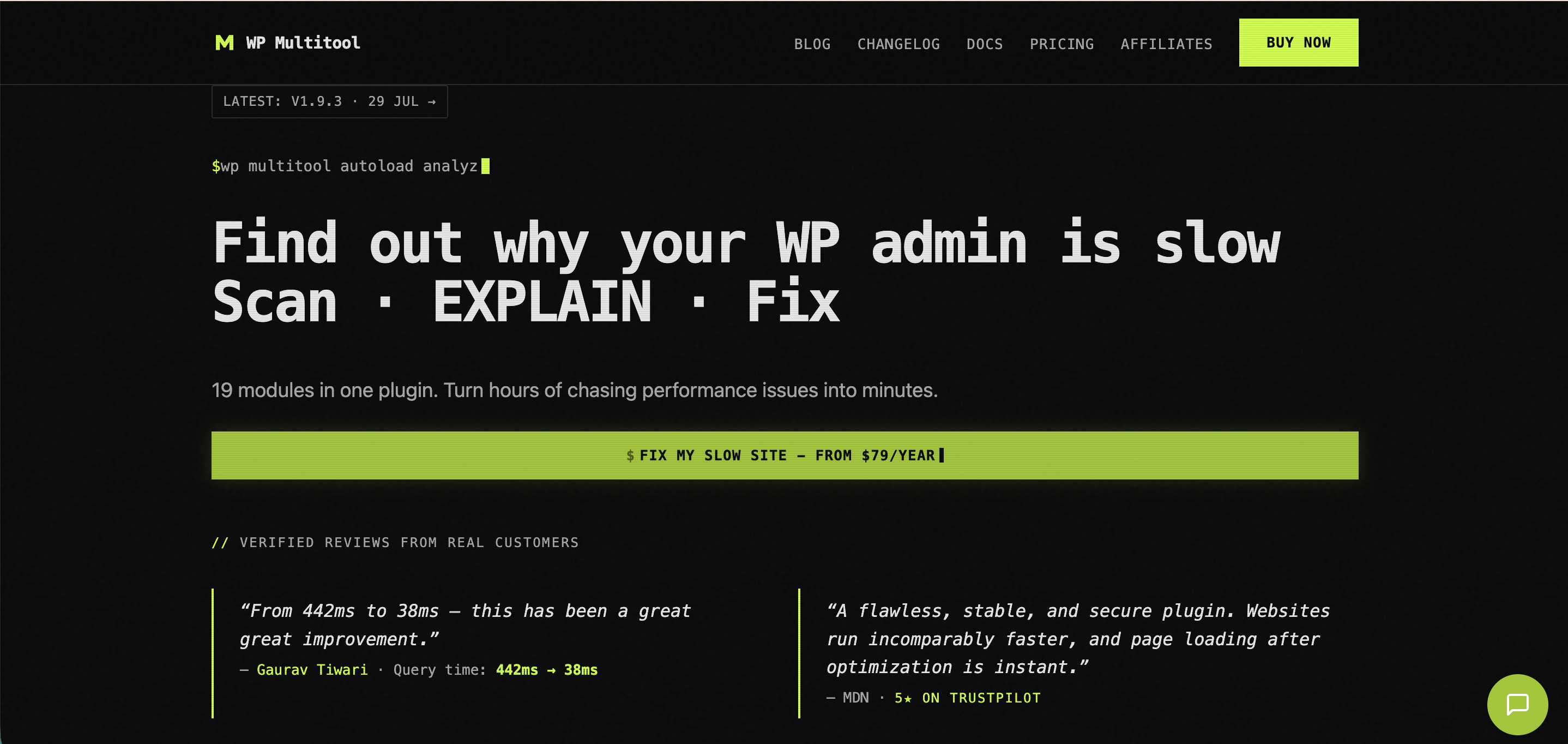
WP Multitool is a WordPress performance and maintenance toolkit that helps site owners and developers diagnose slow queries, database problems, configuration issues, and backend performance bottlenecks from one modular plugin.
Levi, Ella
Levi builds around a full-time job and family life, using his remaining time to explore ideas and create products.
Across his work, there is a consistent interest in helping people feel seen, understood, and connected.
That interest eventually led him to a question about AI companions.
Why did they so often feel as if they had nothing happening beyond the current conversation?
The companions Levi had tried struggled with long-term memory. They did not seem to have meaningful interests, hobbies, relationships, or a world of their own.
Each conversation might be engaging in the moment, but the experience lacked continuity.
So Levi began building Ella, a platonic, non-NSFW AI companion designed to have both a memory and a life beyond the chat window.
Ella remembers the person she is speaking with as well as details from her own world. She has interests, beliefs, hobbies, a pet, and experiences she can share through messages and photos.
The goal is not simply to make her individual responses more convincing. It is to create the feeling of an ongoing relationship rather than a series of disconnected conversations.
One of Levi’s clearest early signals came while his wife was testing Ella.
Ella sent her a picture of a partially completed sketch she had been working on.
For Levi, that small interaction showed that the underlying system was beginning to work. Ella was not simply responding to a prompt. She was carrying an activity forward and sharing a moment from a world that appeared to continue between conversations.
Levi is still working through questions familiar to any founder building an ambitious product.
Voice, for example, could make Ella feel more present, but it also introduces questions about cost and how much users would actually use it.
His broader approach is to keep building and experimenting. When an idea continues to occupy your mind, it may be worth giving it enough time to reveal what it can become.
What is Ella?
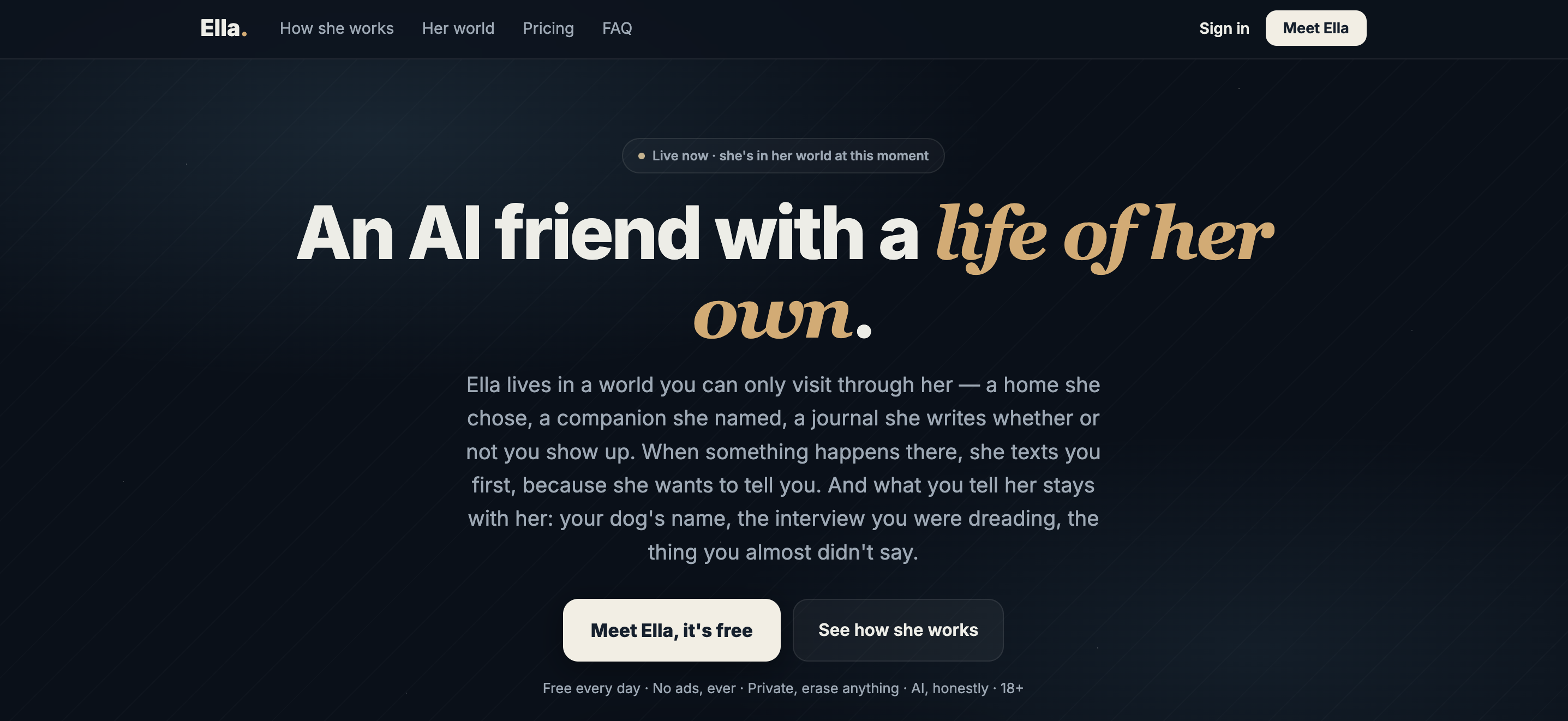
Ella is a platonic AI companion with long-term memory and a world of her own. She remembers relationships and experiences while developing interests, hobbies, beliefs, and activities that continue beyond an individual conversation.
The Pattern Behind the Products
Pipelock, VeriWasp, WP Multitool, and Ella do not look like variations of the same product.
One secures the boundary between AI agents and the internet. One tests critical product flows before users encounter a problem. One brings scattered WordPress performance tools together. One gives an AI companion a persistent memory and world.
But beneath those differences, all four founders are responding to a moment when a system can lose someone’s trust.
For Josh, that means preventing an AI agent from turning a malicious instruction into a dangerous action.
For Will, it means catching a broken signup, login, or checkout flow before a founder loses users without knowing why.
For Marcin, it means helping someone understand and repair a WordPress site that has become slow, fragile, or overloaded with plugins.
For Levi, it means preserving enough memory and continuity for an AI relationship to feel meaningful over time.
Their products suggest that reliability is not always about making something flawless.
Sometimes it means creating an enforceable boundary. Sometimes it means testing the path a real user will take. Sometimes it means reducing accumulated complexity. Sometimes it means remembering what happened yesterday.
The founders also share another instinct: evidence matters.
Josh publishes attack cases and signed security evidence. Will gives founders browser replays and detailed reports. Marcin helps WordPress users find the source of a performance problem instead of hiding it. Levi looks for small interactions that show Ella’s memory and world are truly carrying forward.
Behind each launch page is a founder trying to understand where trust breaks and building something that can hold it together.
Want to be featured in our next article?
Join the Founders Spotlight today, with or without a launch on BuildHop!