

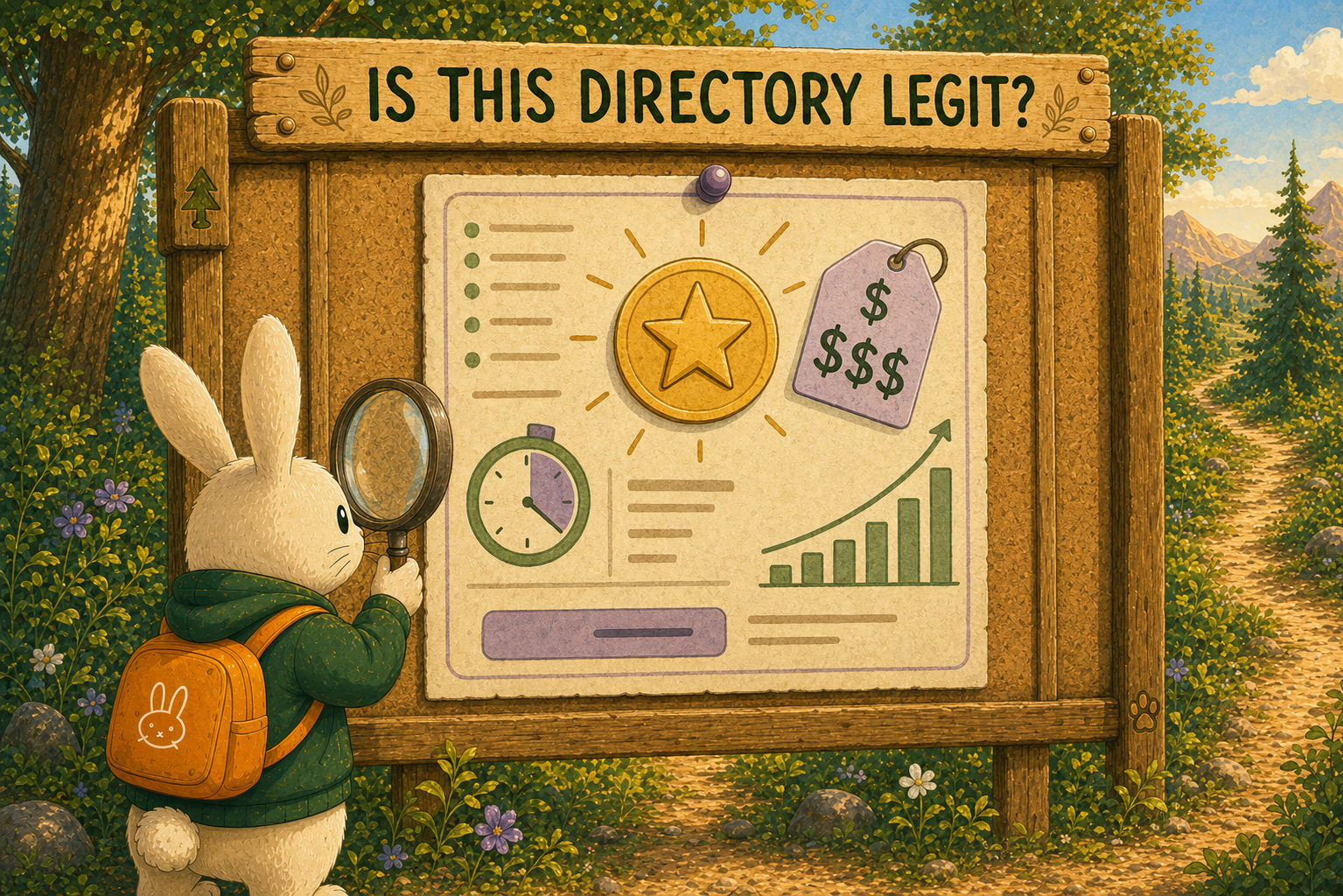
Launching a product is exciting, but it also makes you an easy target.
Once you start promoting a new startup, you may receive messages from directories offering featured placement, guaranteed exposure, permanent backlinks, or access to thousands of potential customers. Some of these directories are valuable. Others are legitimate businesses with very little reach. A few may simply be trying to collect a fee before disappearing.
The important distinction is this:
A launch directory can be real without being worth paying for.
Before entering your card details, look for evidence that the directory has a real audience, provides a clearly defined service, and gives you a reasonable chance of reaching the right people.
Here are 12 red flags to check.
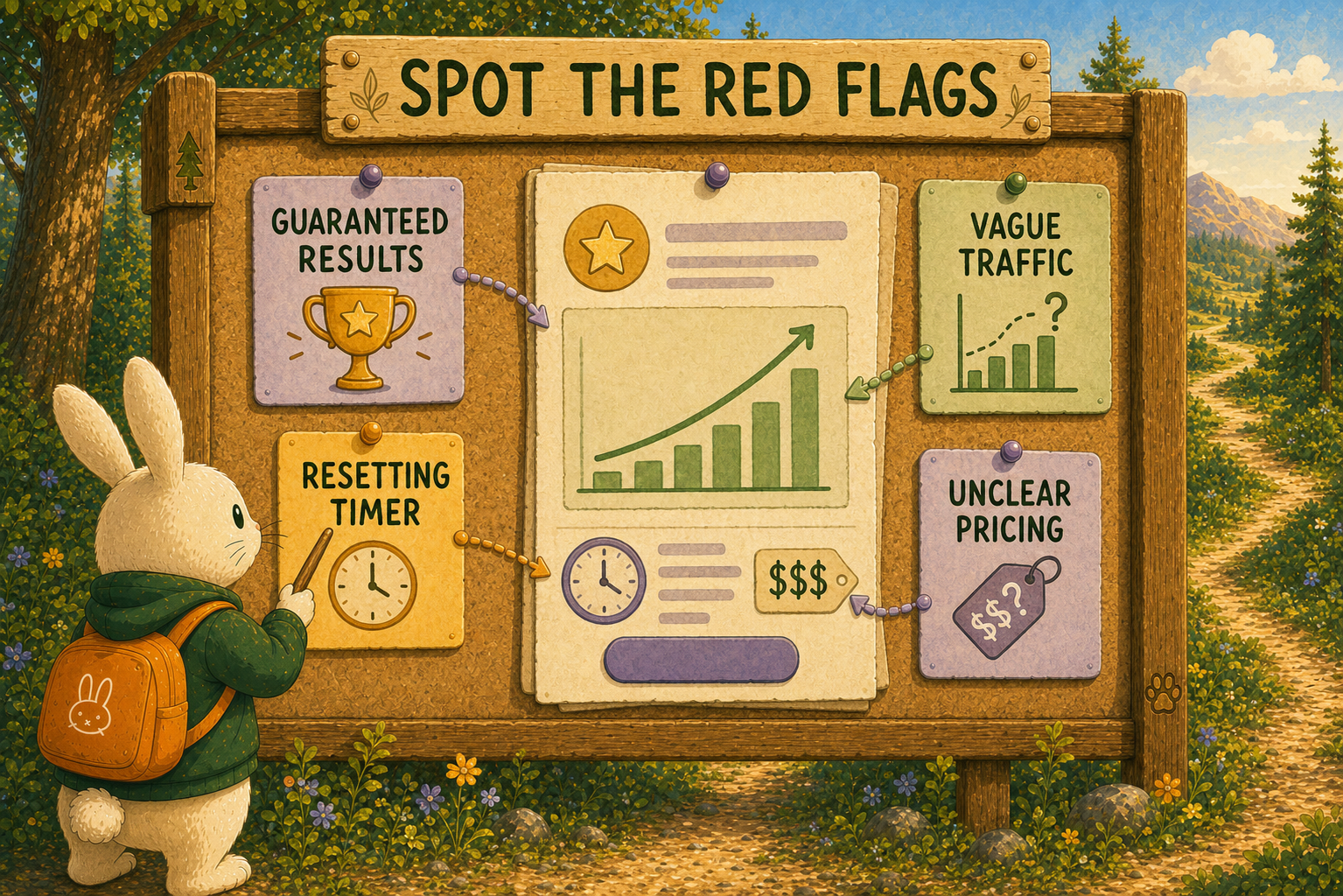
1. It guarantees traffic, customers, or search rankings
No directory can honestly guarantee that people will visit your website, sign up, or become customers.
Even a large platform cannot control how its audience responds to your product. Results depend on your positioning, category, listing quality, timing, pricing, and product-market fit.
Be cautious of promises such as:
“Guaranteed customers”
“Instant Google rankings”
“Thousands of visitors”
“Guaranteed first-page placement”
“Your launch will go viral”
A trustworthy directory should explain what it will provide, such as a listing, newsletter placement, or featured position, without guaranteeing the outcome.
What to check: Ask what is guaranteed as a deliverable and what is merely an estimated result.
2. You cannot tell who operates it
A directory does not need a large team or corporate office to be legitimate. Many excellent projects are run by one person.
You should still be able to find some indication of who is responsible for the site. That might include a founder profile, company name, contact page, social account, or support email that receives a real response.
A private domain registration is not automatically suspicious, but complete anonymity combined with paid listings should make you more cautious.
What to check: Look for a named operator, a working contact method, and a consistent history outside the directory itself.
3. It never clearly identifies its audience
“Get your startup in front of thousands of people” sounds impressive, but which people?
A directory aimed at developers may be valuable for an API product and nearly useless for a local bookkeeping service. Audience relevance matters more than raw audience size.
Good directories can usually describe their visitors clearly:
Indie founders
Marketing professionals
Software developers
Small-business owners
Investors
Design enthusiasts
Buyers researching a particular software category
What to check: Ask who visits the directory and why. If the answer is vague, assume the audience may be vague too.
4. Its traffic claims cannot be explained
Traffic estimates from outside tools are imperfect, especially for smaller websites. That does not mean you should accept any number a directory puts on its sales page.
Be wary when a site claims to receive enormous traffic but provides no context about the period, source, geography, or pages being visited.
“100,000 visitors” could mean 100,000 visitors last month or the total number of visits since the site launched.
What to check: Ask whether the number refers to monthly visitors, page views, newsletter subscribers, or lifetime traffic. Look for consistency between the claim and the site’s visible activity.
5. There is little sign of recent activity
Directories require maintenance. Products close, links break, categories change, and new submissions need to be reviewed.
A long archive is not enough. If the newest listings are months old, social accounts have gone silent, and prominent links no longer work, the directory may no longer have an active audience.
This does not necessarily make it fraudulent. It does make a paid submission harder to justify.
What to check: Review the newest listings, recent social posts, newsletter archive, and dates on editorial content.
6. Existing listings appear to receive no meaningful attention
Some sites display public vote, comment, or view counts. Others do not, so a lack of visible engagement is not conclusive by itself.
Look at the broader picture. Are listings shared on active social channels? Does the directory publish a newsletter? Do featured products receive comments or mentions elsewhere? Have founders described receiving useful traffic?
A directory with thousands of listings but no apparent activity may be functioning mainly as a database rather than as a launch channel.
What to check: Examine several recent listings rather than relying on the directory’s handpicked success story.
7. Its listing pages are thin, duplicated, or difficult to find
One common reason to pay for a directory is the possibility of ongoing discovery through search engines. That benefit is limited if product pages contain almost no original information or cannot be found in search results.
Search visibility is never guaranteed, and new pages may take time to appear. Still, established directories should usually have some discoverable listing pages.
What to check: Search for the exact titles of several older product listings. Open those pages and see whether they contain useful, product-specific information rather than the same generic text repeated everywhere.
8. Its testimonials cannot be verified
Testimonials are easy to invent and easy to present without context.
A first name, profile photo, and statement such as “We received amazing exposure” tells you very little. Stronger testimonials identify the founder, name the product, and describe a specific result.
Even then, treat one exceptional outcome as an example, not as a promise that every listing performs the same way.
What to check: Confirm that the person and product exist. Look for the original post, case study, or public mention when possible.
9. You cannot determine what you are buying
Before paying, you should know exactly what is included.
Does the fee buy:
A standard directory listing?
Editorial review?
Homepage placement?
A newsletter feature?
Social promotion?
A permanent page?
Placement for a fixed number of days?
Faster review rather than guaranteed acceptance?
Terms such as “premium exposure” or “launch boost” are too vague on their own.
What to check: Ask for the exact placement, duration, publication timeline, and promotional channels in writing.
10. Pricing, renewals, or refund terms are difficult to find
A legitimate paid service should make its basic commercial terms understandable before checkout.
Pay particular attention to whether the charge is one-time or recurring. A low submission fee becomes a very different purchase if it renews every month.
Also check what happens if your product is rejected, the listing is never published, or the directory removes it later.
A strict no-refund policy is not automatically a scam, but it should be disclosed clearly before payment.
What to check: Save a copy of the offer and read the checkout page, billing frequency, cancellation instructions, and refund policy.
11. It relies on pressure instead of evidence
Artificial urgency is especially common around launches because founders already feel short on time.
Be cautious when a directory claims that:
Only one featured position remains
The price will increase within minutes
You must pay before seeing any details
Your invitation will permanently expire
Immediate payment is required to preserve your ranking
Real promotional slots can be limited, but trustworthy sellers should still give you enough information to make an informed decision.
What to check: Leave the page and return later. See whether the countdown or “limited” inventory mysteriously resets.
12. The numbers do not make sense for your business
A directory can pass every legitimacy check and still be a poor investment.
Suppose a listing costs $100. If your website converts 5% of qualified visitors into trials, and 10% of those trials become paying customers, you would need roughly 200 qualified visits to acquire one customer.
Whether that is worthwhile depends on what a customer is worth to you.
Use this simple framework:
Expected value = estimated qualified visitors × conversion rate × customer value
The numbers will be uncertain. The point is not to predict the result perfectly. It is to identify what would need to happen for the purchase to make sense.
What to check: Calculate the approximate traffic or customer result needed to recover the listing fee. Then decide whether that outcome is realistic.
A five-minute launch directory check
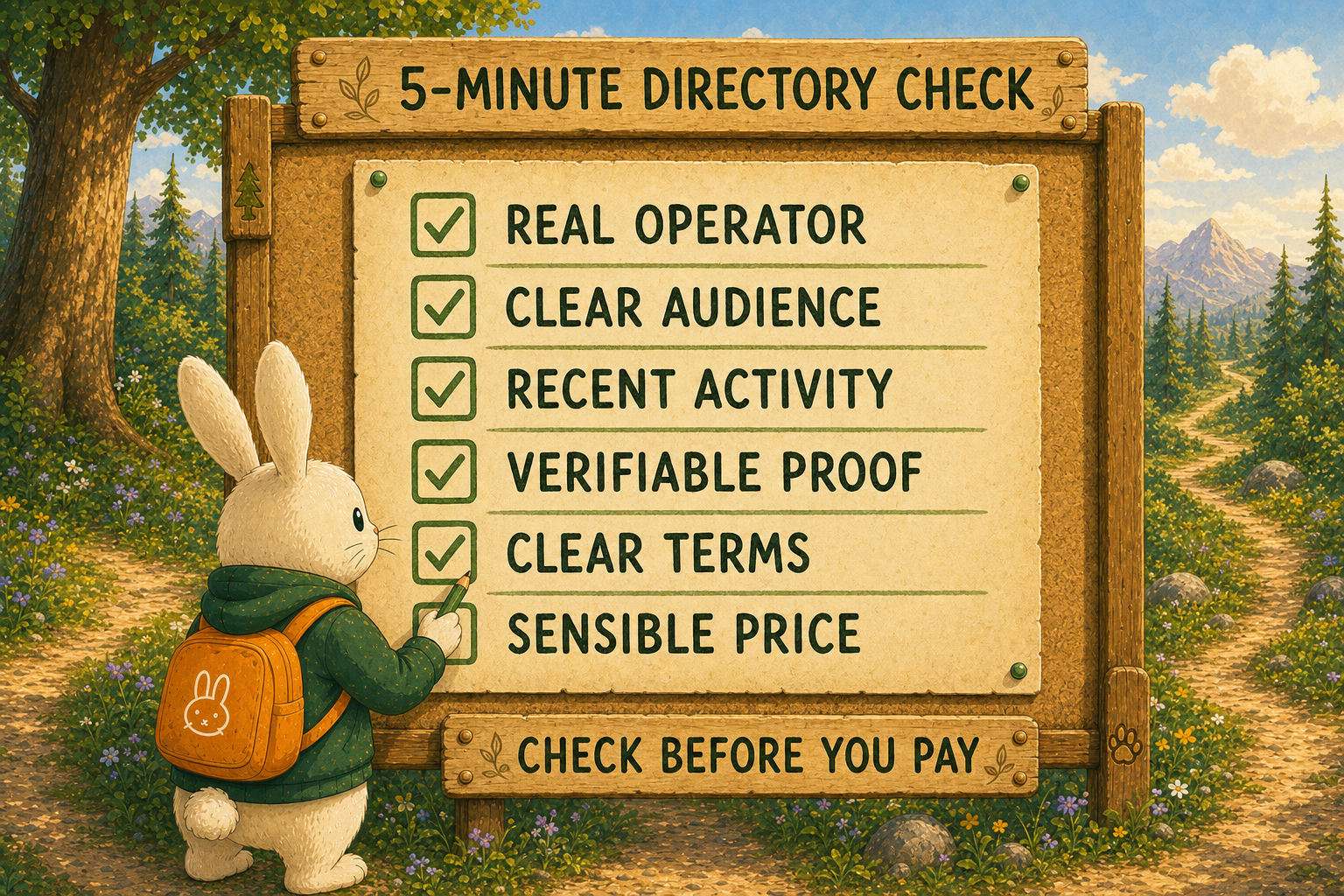
Before paying, answer these questions:
Can I identify who runs the directory?
Can I clearly describe its audience?
Are there recent listings and signs of active maintenance?
Can its traffic or subscriber claims be put into context?
Can I verify at least some testimonials?
Do older product pages appear in search results?
Do I know exactly what the fee includes?
Are the billing and refund terms clear?
Is the directory promising exposure rather than guaranteed outcomes?
Does the potential return justify the cost?
One weak answer does not necessarily mean a directory is fake. Several weak answers together are a reason to pause.
What a trustworthy launch directory looks like
The strongest directories tend to be straightforward about what they are and are not.
Look for:
A specific, relevant audience
Clear pricing and deliverables
Recent activity
Real product listings
Reachable operators
Verifiable examples
Reasonable claims
Secure, familiar payment methods
Clear billing terms
No pressure to make an immediate decision
New or small directories should not automatically be dismissed. A focused directory with a modest but highly relevant audience can outperform a much larger general platform.
The key is transparency.
The bottom line
Do not judge a launch directory solely by how polished its homepage looks or by how large its traffic claims sound.
Verify the audience. Inspect existing listings. Understand the deliverables. Read the billing terms. Run the numbers for your own business.
Most importantly, separate these two questions:
Is this directory legitimate?
Is this directory a worthwhile investment for my product?
You need a satisfactory answer to both before you pay.