

A lot of founders eventually discover Domain Rating (DR). The number starts showing up everywhere.
People compare directories by it. SEO tools highlight it. Communities use it as a shortcut for deciding whether a backlink is "worth it."
And to be fair, DR can be useful. But it can also create a dangerous assumption:
More backlinks = more authority.
That's not always true.
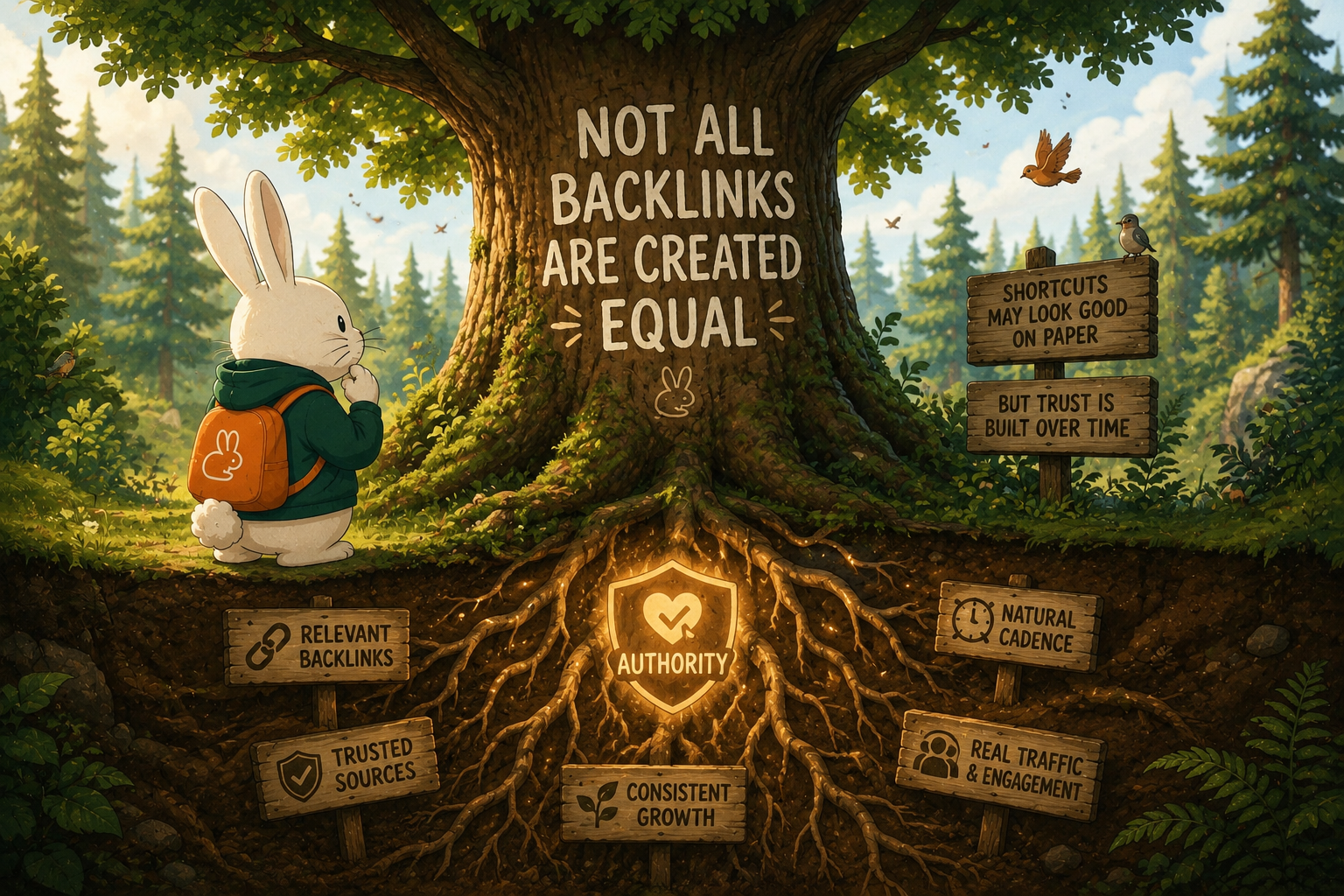
Because not all backlinks are created equal.
The Problem With Looking at One Number
Imagine two websites. Both have a DR of 40.
On paper, they look similar. But under the surface, they might be completely different.
One site earned relevant backlinks over several years from websites in its industry. The other accumulated backlinks much faster from sources that have little connection to its niche.
Both sites have the same DR. But most founders would probably agree those backlink profiles aren't equally valuable.
That's because authority is about more than volume. It's also about quality, relevance, trust, and consistency.
Why This Matters More Than Ever
A few years ago, founders mostly cared about backlinks because of search rankings.
Today, the conversation is bigger. Founders want to get indexed faster. They want stronger trust signals online. And they want to show up across both traditional search and the newer wave of AI-powered discovery.
None of that depends on a single metric.
The health of your backlink profile matters. So does how quickly those backlinks were acquired. So does the relationship between your authority and your traffic.
Looking at one number alone can hide a lot of useful information.
A Better Question
Instead of asking: "What is my DR?"
A more useful question might be: "How healthy is my authority profile?"
That's the question we became interested in. Not whether a number is high, but whether the underlying signals suggest long-term trust and authority.
Introducing TrueDR
This is where TrueDR comes in.
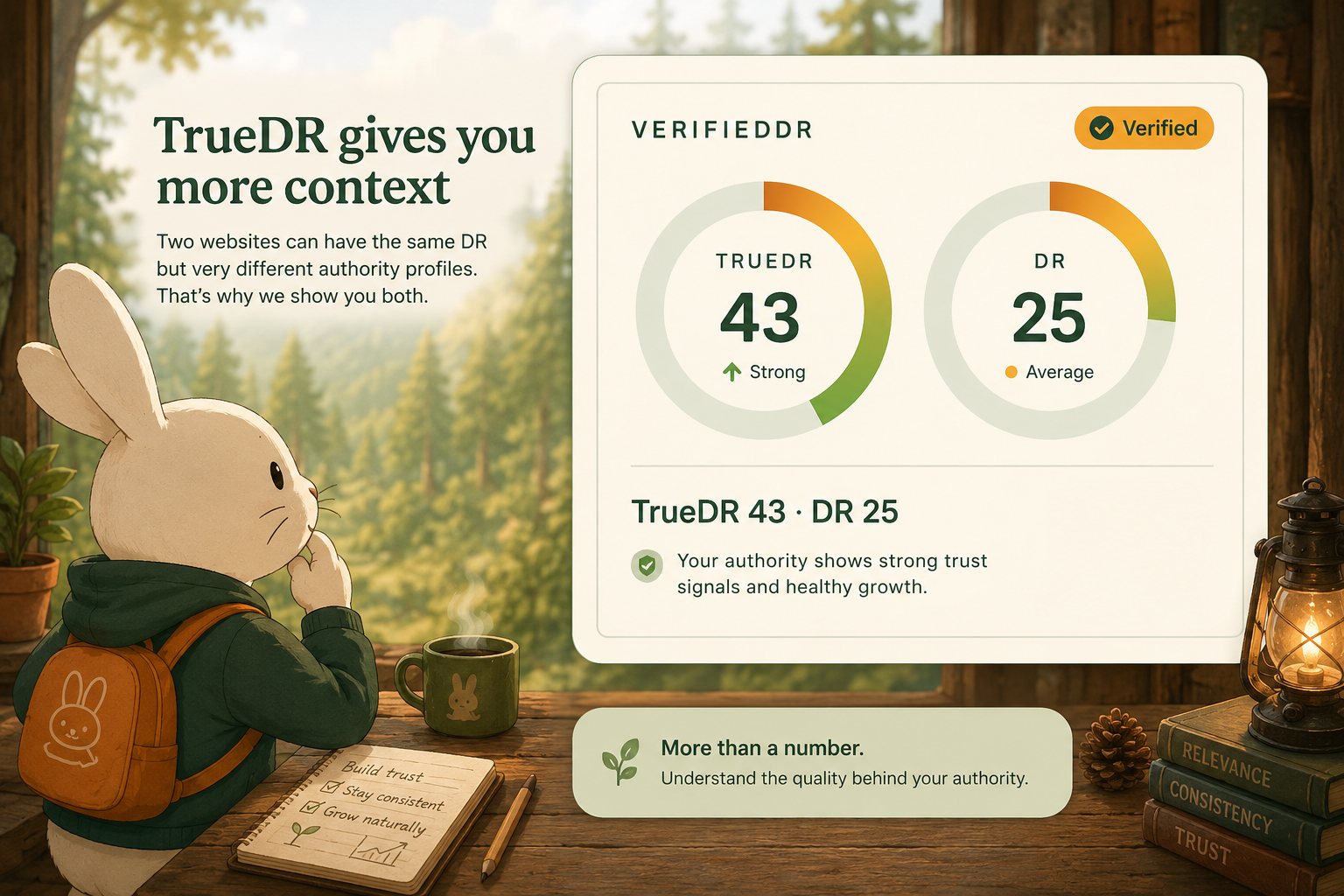
TrueDR is built by our partner, VerifiedDR. We brought them the idea. They built it. Rather than looking at authority through a single lens, TrueDR incorporates additional signals including backlink quality, backlink relevance, backlink acquisition cadence, domain age relative to backlink growth, and traffic patterns.
The goal isn't to replace traditional DR. The goal is to provide additional context.
Because two websites with the same DR can have very different authority profiles.
What Does It Mean When TrueDR Is Higher?
Generally, it's a positive signal.
A higher TrueDR can indicate that your backlink profile is developing naturally, and that the quality of your authority signals may be stronger than a traditional DR score alone suggests.
It can be a sign that you're building trust the slow way. One relevant backlink at a time.
What Should Founders Do With This Information?
The answer is usually not to chase more backlinks.
It's to chase better ones.
Relevant directories. Relevant communities. Relevant mentions. Consistent distribution.
A steady cadence of quality submissions often creates stronger long-term authority than trying to manufacture growth all at once.
If your scores are significantly different, that's your signal to dig deeper. Look at your backlinks inside VerifiedDR understand what's contributing to the gap, then use BuildHop's recommended directory submissions to keep building relevant authority over time.
For many founders, that can be as simple as making 1-5 quality submissions each week.
The goal isn't to inflate a metric. The goal is to build real authority over time.
Now Available Inside BuildHop
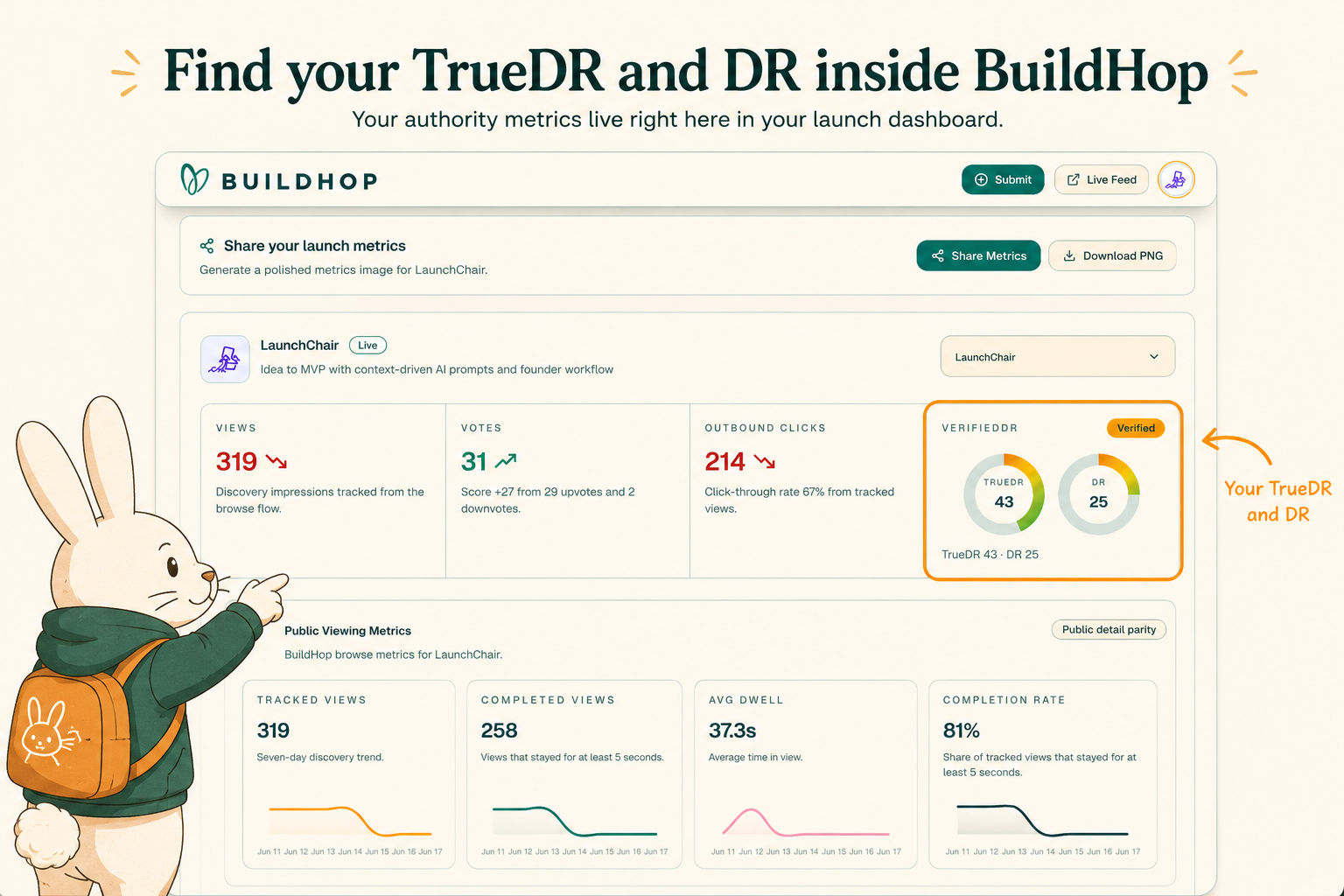
Every BuildHop launch is now automatically connected to VerifiedDR.
Founders can see both traditional Ahrefs DR and TrueDR directly inside their private analytics dashboard, because understanding your authority shouldn't require stitching together multiple tools.